
Power of The Choke Point
It doesn’t need to win a war. It doesn’t need to defeat the United States. It only needs to make the world nervous. A few mines. A few seizures. A few “inspections.” That’s enough to send insurance rates soaring, tankers rerouting, and markets reacting.
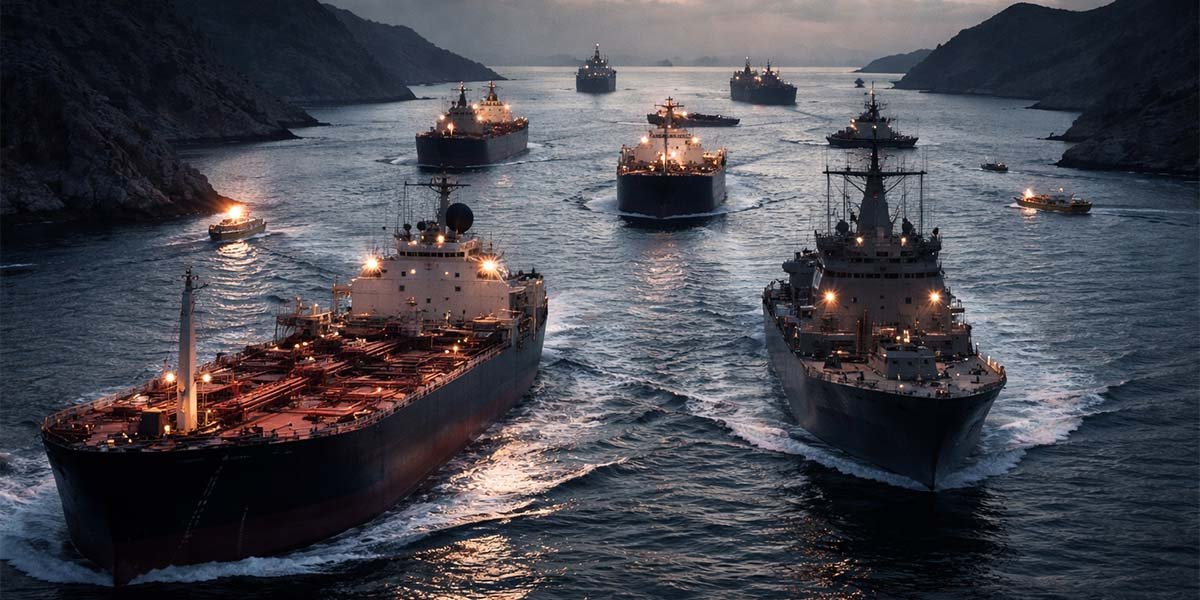 The United States can respond with overwhelming force. It can patrol, escort, strike, and threaten. But it cannot change geography. It cannot move the Strait. It cannot remove the fact that global energy still flows through a narrow corridor controlled, in part, by an adversary.
v
And so both sides are trapped.
Iran cannot fully close the Strait without inviting devastating retaliation. The United States cannot fully secure it without risking escalation that spreads far beyond the region. Every move tightens the system. Every response raises the stakes.
This is what modern power looks like.
Not domination. Not victory. But pressure.
A narrow passage of water where the global economy, military force, and political will all collide—and where no one can act freely without consequence.
Beyond the headlines, the deeper question is not who controls the Strait.
It is whether the system built around it can survive repeated shocks.
For decades, the world accepted this vulnerability because it worked. Oil flowed. Prices stabilized. Conflicts stayed contained. But that system depended on restraint—on the idea that no one would push the leverage too far.
That assumption is now being tested.
Because once leverage is proven, it gets used.
And once it gets used, it rarely stays contained.
The Strait of Hormuz is no longer just a strategic location. It is a pressure point in a fragile global system—one that connects energy, economics, and war into a single, unstable equation.
Iran knows it.
The United States knows it.
And now, the world is beginning to feel it.
The United States can respond with overwhelming force. It can patrol, escort, strike, and threaten. But it cannot change geography. It cannot move the Strait. It cannot remove the fact that global energy still flows through a narrow corridor controlled, in part, by an adversary.
v
And so both sides are trapped.
Iran cannot fully close the Strait without inviting devastating retaliation. The United States cannot fully secure it without risking escalation that spreads far beyond the region. Every move tightens the system. Every response raises the stakes.
This is what modern power looks like.
Not domination. Not victory. But pressure.
A narrow passage of water where the global economy, military force, and political will all collide—and where no one can act freely without consequence.
Beyond the headlines, the deeper question is not who controls the Strait.
It is whether the system built around it can survive repeated shocks.
For decades, the world accepted this vulnerability because it worked. Oil flowed. Prices stabilized. Conflicts stayed contained. But that system depended on restraint—on the idea that no one would push the leverage too far.
That assumption is now being tested.
Because once leverage is proven, it gets used.
And once it gets used, it rarely stays contained.
The Strait of Hormuz is no longer just a strategic location. It is a pressure point in a fragile global system—one that connects energy, economics, and war into a single, unstable equation.
Iran knows it.
The United States knows it.
And now, the world is beginning to feel it.
Click to read in English or Spanish
The United States can respond with overwhelming force. It can patrol, escort, strike, and threaten. But it cannot change geography. It cannot move the Strait. It cannot remove the fact that global energy still flows through a narrow corridor controlled, in part, by an adversary.
v
And so both sides are trapped.
Iran cannot fully close the Strait without inviting devastating retaliation. The United States cannot fully secure it without risking escalation that spreads far beyond the region. Every move tightens the system. Every response raises the stakes.
This is what modern power looks like.
Not domination. Not victory. But pressure.
A narrow passage of water where the global economy, military force, and political will all collide—and where no one can act freely without consequence.
Beyond the headlines, the deeper question is not who controls the Strait.
It is whether the system built around it can survive repeated shocks.
For decades, the world accepted this vulnerability because it worked. Oil flowed. Prices stabilized. Conflicts stayed contained. But that system depended on restraint—on the idea that no one would push the leverage too far.
That assumption is now being tested.
Because once leverage is proven, it gets used.
And once it gets used, it rarely stays contained.
The Strait of Hormuz is no longer just a strategic location. It is a pressure point in a fragile global system—one that connects energy, economics, and war into a single, unstable equation.
Iran knows it.
The United States knows it.
And now, the world is beginning to feel it.
Click to read in English or Spanish