Is 2028 Already Decided?
Political coalitions may already be shifting in ways that could shape the 2028 election long before candidates even enter the race.
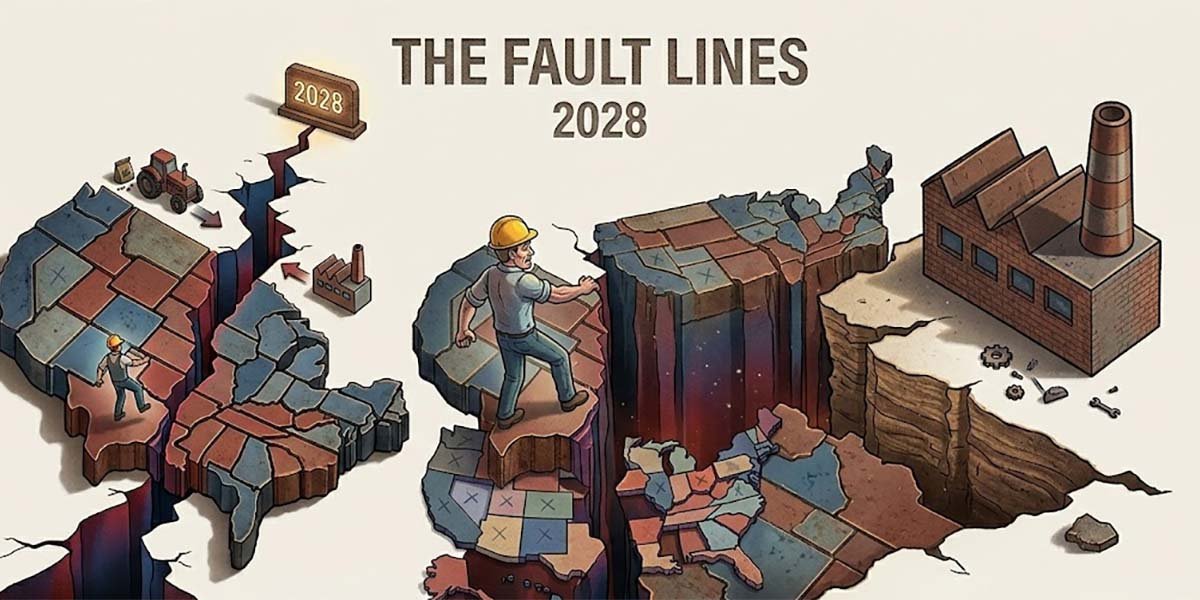
Democrats didn’t just lose an election. They may have run into something larger.
The easy explanation is candidate weakness or campaign mistakes. The harder question is structural change.
When parties lose badly, the instinct is to swap personalities and try again. But history suggests that when losses feel deeper than a single cycle, the problem may not be messaging. It may be alignment with the public mood.
American politics has always moved in waves. Coalitions rise, dominate for a time, and eventually weaken as economic pressure, cultural shifts, and institutional distrust reshape voter priorities.
When Political Coalitions Begin to Shift
Today’s political environment carries several pressures at once: inflation fatigue, identity conflict, and declining faith in traditional leadership. In that climate, clarity and emotional connection often outperform detailed policy arguments.
Parties built around complex coalitions can struggle when voters are looking for something simpler and more direct.
The deeper question may not be the candidates.
It may be the coalition itself.
The risk for Democrats is assuming time alone will reset the landscape. If the current coalition feels fragmented or uncertain to voters, waiting for demographic change may not be enough.
Political realignments tend to reward movements that offer a clear narrative about who belongs, what went wrong, and how stability can be restored.
None of this means the 2028 election is predetermined. Political environments can change quickly, and governing realities often reshape public opinion.
But the emerging question is less about which Democrat might run.
It is whether the party can rebuild a shared sense of direction strong enough to feel competitive again in the next national cycle.
Elections are decided in real time. But the conditions that shape them often take years to form.
The debate over the 2028 election may have already begun — not with candidates, but with identity, clarity, and trust.