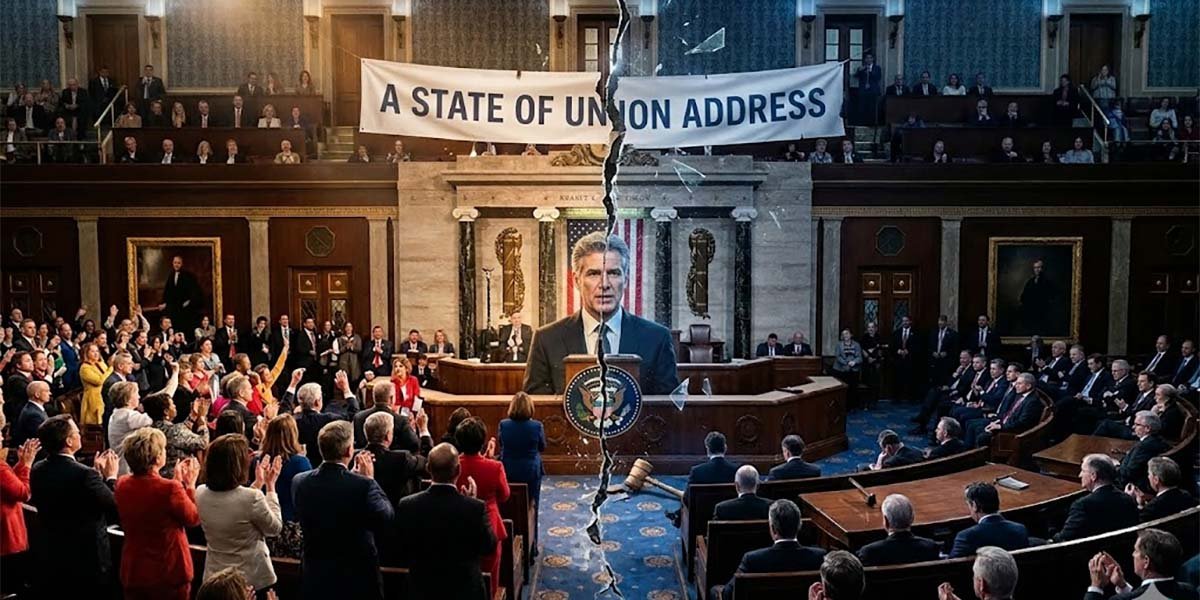
A State of the Union address is one of the few moments when America pauses to watch itself. The chamber fills, cameras widen, and a president steps forward to describe a nation assumed to be whole. Applause rises. Some stand. Others remain seated.
Yet beneath the ceremony lies a harder question: Can unity be declared simply by gathering in one room?
During the State of the Union addresses of Donald Trump, the contrast was visible. One side applauded. The other remained still. The speech projected confidence, while the chamber reflected division. A State of the Union is not just policy. It is identity. It asks who Americans are and what binds them together.

But unity cannot be performed. It depends on trust — in institutions, elections, and one another. When trust weakens, unity can feel like theater.
Division has always existed. The deeper question is whether Americans still believe unity is possible.