Political coalitions may already be shifting in ways that could shape the 2028 election long before candidates even enter the race.
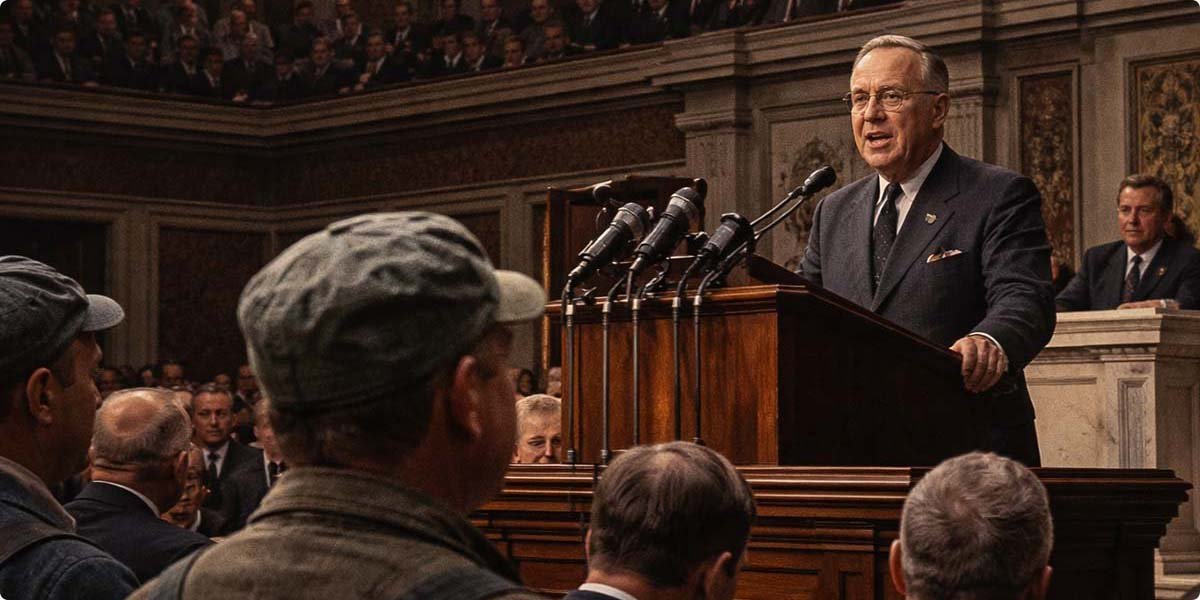
In May 1946, with World War II barely over, Harry S. Truman stood before Congress seeking emergency authority that could have forced striking railroad workers into the U.S. Army and ordered them back to work under threat of court-martial. The request came amid a volatile postwar transition marked by surging inflation, industrial reconversion, and nearly five million workers on strike after years of wartime wage restraint.
When 400,000 railroad workers walked out, freight halted, coal shipments stalled, and food deliveries backed up. In a nation still heavily dependent on rail transport, the shutdown threatened to choke off vital supplies within days. Truman had already seized control of the railroads to pressure a settlement, but when negotiations failed, he escalated to Congress.
The episode carried real tension. Truman had long aligned himself with labor, yet he also believed preserving national stability was paramount. To him, a paralyzed rail system posed a danger to the broader recovery. The core issue was whether the strike remained a lawful exercise of labor power or had become a national emergency warranting extraordinary executive authority.
Before Congress acted, union leaders reached a settlement and trains resumed service. The crisis passed. What lingered was the precedent: how quickly democratic boundaries can narrow when fear and economic pressure collide, and how close the country came to militarizing a domestic labor dispute in the name of public necessity.